

If you’ve started learning Vietnamese, you’ve likely realized that the simple “I” and “you” of English don’t quite cut it. In fact, the Vietnamese pronoun system is so intricate that it can sometimes drive even native speakers crazy. To help you navigate this social architecture, let’s break down the rules of how to address yourself and others correctly.
The Two Main Groups of Vietnamese Pronouns
The Vietnamese Pronoun system is generally divided into two categories:
- Participant-based: These are based strictly on who is speaking and who is listening.
- Hierarchy-based: These are based on age, gender, and generation.
Group 1: The Formal Basics (Tôi and Bạn)
In many textbooks, you’ll learn Tôi for “I” and Bạn for “you”. While these can be used for anyone regardless of age or gender, they are considered quite formal and are rarely heard in daily settings like markets, restaurants, or cafes. Vietnamese speakers generally prefer more personal pronouns that aim at a specific person’s social standing.
Group 2: The Social Architecture (Age, Gender, and Generation)
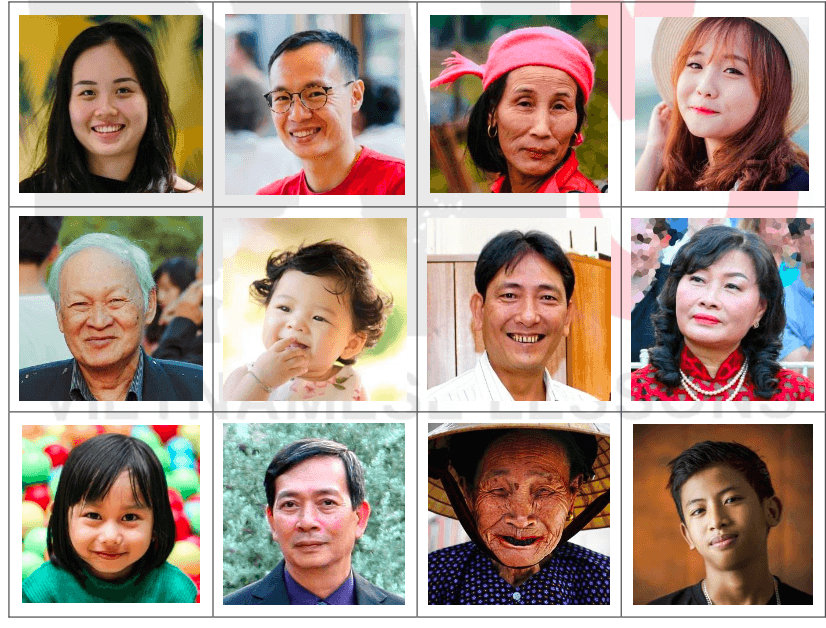
The most common way to address people is to determine their relationship to you based on three elements: generation, age, and gender.
- Same Generation:
- Anh: For men slightly older than you.
- Chị: For women slightly older than you.
- Em: For anyone (male or female) younger than you.
- One Generation Older (Aunt/Uncle age):
- Bác: For men or women older than your parents.
- Chú: For men younger than your parents.
- Cô: For women younger than your parents.
- Two Generations Older (Grandparent age):
- Ông: For men the age of your grandfathers.
- Bà: For women the age of your grandmothers.
- Younger Generations:
- Cháu: Used for children, nieces, nephews, or anyone one or two generations younger than you.
Note: While many of these terms can be used for strangers, terms like Bố (Dad), Mẹ (Mom), and Con (Child) are strictly reserved for your own parents and children. However, in Central and Southern Vietnam, “con” is often used in place of “cháu,” which is more commonly used in the North.
The Rule of Reciprocity: Addressing Yourself
In Vietnamese, how you call the other person determines how you call yourself. It is a paired system:
- If you call someone Anh or Chị (older brother/sister), you must call yourself Em (younger sibling).
- If you call someone Chú or Cô (uncle/aunt), you address yourself as Cháu (niece/nephew).
- If you call someone Con (your child), they will call you Bố or Mẹ.
What If You Aren’t Sure?
Since you won’t always know someone’s exact age, you have to guess based on their look. If you choose incorrectly, don’t worry! Native speakers have a simple trick: listen to how they reply.
If you call a woman Cô (Aunt) and she replies by calling you Em (younger sibling), she is signaling that she wants to be addressed as Chị (older sister) instead. Simply switch to the pronoun she used in the next sentence, and everyone will be happy.
If you’d like to understand Vietnamese Pronouns with vivid illustration and detailed explanation, tune in to our video here:

Interested in cracking Vietnamese Pronouns and other daily phrases with us?
Tieng Viet Oi offers both Private and Group Classes in Hanoi, Da Nang, and Ho Chi Minh City. See our Class Types and sign up with us whenever you’re ready!